Table of Contents
ToggleIf your home has hard water, mineral-heavy water that leaves spots on dishes and makes soap less effective, a water softener is a practical investment. But once you’ve got the system running, keeping it fed with the right salt is crucial. Lowe’s carries several types of water softener salt, and picking the wrong one can hurt your system’s efficiency or void your warranty. This guide walks you through what Lowe’s offers, how to choose wisely, and how to avoid common pitfalls so your softener keeps working smoothly year-round.
Key Takeaways
- Lowe’s water softener salt comes in three main forms—pellets, crystals, and blocks—each suited to different system types and water conditions, with pellets being ideal for most modern residential softeners.
- Always check your softener’s manual or manufacturer specifications before buying salt to avoid using the wrong form, which can damage the resin bed or void your warranty.
- Choose food-grade salt with at least 99% purity to prevent insoluble minerals from clogging your tank and reducing efficiency.
- Bulk buying 4–6 bags at a time from Lowe’s reduces per-trip costs and delivery fees, especially during spring seasonal sales offering 10–15% discounts.
- Store water softener salt in a cool, dry place below 75°F, protect it from moisture with plastic bins or tarps, and inspect bags for damage to prevent clumping and degradation.
- Monitor your salt tank monthly, avoid overfilling (maintain 75% capacity), and get a professional inspection annually to catch salt bridges, resin bed damage, and control head issues early.
What Types of Water Softener Salt Does Lowe’s Offer
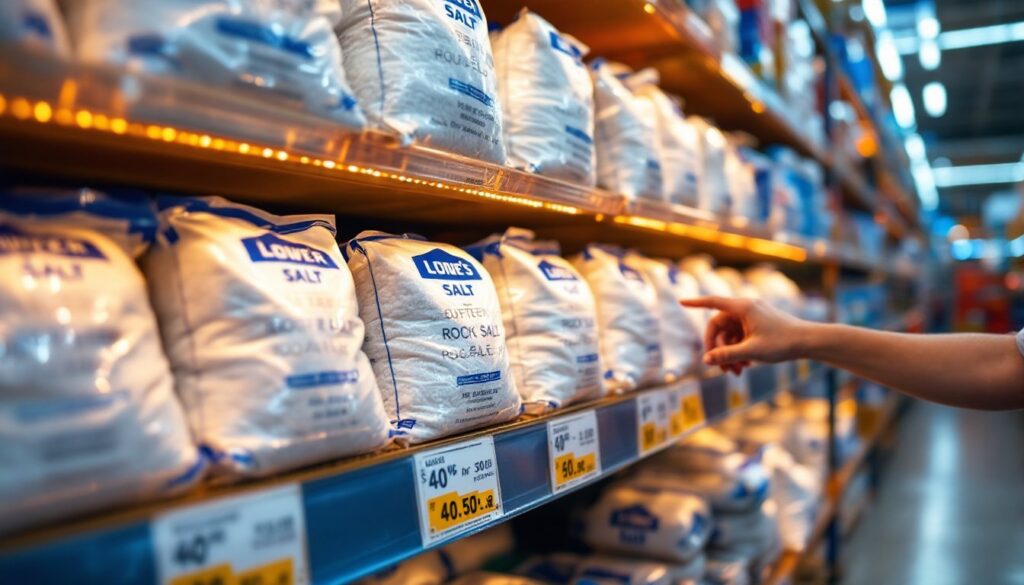
Lowe’s stocks several salt options for water softeners, each with pros and cons. The three main forms are pellets, crystals, and blocks, and your system’s design and local water conditions will determine which works best for you.
Comparing Salt Forms: Pellets, Crystals, and Blocks
Pellets are small, compact beads made from evaporated brine. They dissolve quickly and leave minimal residue, making them ideal for most residential softeners. Pellets are space-efficient, you fit more salt per bag, and won’t cake up as easily as crystals in humid conditions. Most newer softener models are optimized for pellets.
Crystals (also called rock salt) are mined salt in larger, irregular chunks. They’re coarser and slower to dissolve than pellets, which can leave sediment in the brine tank. But, they’re often cheaper per pound and work fine in older systems or where purity isn’t as critical. If your area has high humidity, crystals tend to clump in the salt tank, requiring manual breaking apart.
Blocks (also called nuggets) are compressed salt tablets designed for specific softener models. They dissolve more slowly and are useful in systems with smaller tanks or where you want a very slow, steady brine feed. Not all softeners accept blocks, so check your manual before buying.
Lowe’s typically carries all three forms under its own brand and third-party labels. Check your softener’s manual or the manufacturer’s website first, many systems have salt type recommendations, and using the wrong form can damage the resin bed or create bridges (salt clumping that leaves gaps in the tank).
How to Choose the Right Salt for Your System
Choosing the right water softener salt hinges on three factors: your system’s design, your water hardness level, and salt purity.
System Type and Salt Compatibility: Start by checking whether your softener is a single-tank or dual-tank system. Single-tank models (the most common in homes) go offline while regenerating, so the regeneration cycle matters less. Dual-tank systems alternate, so you always have soft water. Both work with pellets, but older or specific models may require crystals or blocks. Look up your system’s model number, it’s usually on a sticker in the cabinet, and verify salt type requirements with the manufacturer or check the owner’s manual.
Water Hardness and Salt Demand: The harder your water, the more salt your system uses per regeneration cycle. If you have very hard water (above 20 GPG, or grains per gallon), you’ll refill the salt tank more often, so buying in bulk at Lowe’s makes sense. Softener dealers can test your water hardness, or home test kits run $10–$20. Products like those from resources such as Good Housekeeping’s tested recommendations can guide your selection.
Salt Purity: Water softener salt isn’t table salt and shouldn’t contain additives like iodine. Lowe’s carries food-grade and commercial-grade salts specifically labeled for water softeners. Look for at least 99% purity, lower grades contain more insoluble minerals (clay, silica) that settle in the tank and reduce efficiency. Higher purity costs more upfront but means fewer water quality issues and less maintenance.
Tips for Buying and Storing Water Softener Salt at Lowe’s
Shopping smart at Lowe’s saves money and prevents hassles. Here’s how to do it right.
Bulk Buying and Cost Savings: Water softener salt is heavy and cheap per pound if you buy in volume. Lowe’s often offers bulk discounts on 40–50 lb bags. If you have hard water and use a lot of salt, buying 4–6 bags at a time cuts the per-trip cost and reduces delivery fees if ordering online. Check current promotions, seasonal sales, especially in spring, can offer 10–15% discounts.
Storage Best Practices: Store salt in a cool, dry place. The garage or a basement corner works well if it stays below 75°F and stays dry. Never store salt in direct sunlight or high heat, as it can degrade the brine and cause clumping. Use a plastic storage bin or tarp to keep moisture off. If you live in a humid climate, add moisture-absorbing packets (like those used in supplement bottles) to your storage area. Check bags for damage, torn or punctured bags let moisture in, and salt exposed to rain or snow will cake up fast.
Check Compatibility Before Buying: Bring your softener’s manual or a photo of the model number with you to Lowe’s. Staff can help verify which salt form is right for your system. Buying the wrong salt is frustrating and wastes money, so it’s worth a few minutes of research upfront.
Common Mistakes to Avoid When Using Water Softener Salt
Even simple mistakes can reduce your softener’s lifespan and water quality. Here’s what to watch out for.
Using Non-Food-Grade or Impure Salt: Some people grab cheap rock salt meant for de-icing or sidewalk use. Don’t. Those products contain clay, sand, and other impurities that clog the resin bed and tank, leading to costly repairs or replacements. Always buy salt labeled “water softener salt” or “food-grade salt for softeners.”
Overfilling or Underfilling the Salt Tank: The salt tank should be filled to about 75% capacity, not to the brim. Overfilling causes salt bridges, a hard crust forms on top while the bottom stays hollow, and the system can’t draw brine properly. Underfilling means the system regenerates more often, wasting salt and water. Check your softener’s manual for the recommended fill level and try to maintain it.
Ignoring Water Usage Spikes: If your household grows (guests, new family members) or you add a pool, water demand jumps. Your softener may need refilling more often. Monitor the salt tank monthly and adjust your purchasing routine if needed. Some systems have low-salt indicator lights: pay attention to them.
Skipping Tank Cleanings: Once a year, especially in hard-water areas, inspect the salt tank for sediment or salt bridges. If you notice crusty buildup, drain the tank, scrub it with a brush and clean water, and rinse thoroughly before refilling. This prevents bacterial growth and keeps the system efficient. Resources like Family Handyman’s home maintenance guides offer step-by-step tank cleaning instructions.
Maintaining Your Water Softener for Best Results
Beyond buying the right salt, basic maintenance keeps your softener running for 15–20 years.
Regular Regeneration and Monitoring: Your softener’s control head should trigger regeneration on a schedule or when the resin reaches capacity. Most systems regenerate at night or during low-usage hours. Check that the system is cycling as expected, if it’s not regenerating, your water will gradually become hard again. Many digital heads show cycle history: review it quarterly.
Annual Professional Inspection: Once a year, especially if you have very hard water or notice soft water quality dropping, have a professional test the system. They can check for resin bed damage, salt bridge formation, and control head calibration. Costs typically run $100–$200 and can prevent major repairs down the line.
Track Salt Usage: Write down when you refill the tank and how many bags you use. Over time, you’ll notice patterns (e.g., “I use two 40 lb bags per month”). This baseline helps you spot inefficiency early, if suddenly you’re buying twice as much salt for the same water usage, something’s wrong. Sites like HomeAdvisor’s repair guides can help diagnose common softener issues.
Water Testing: Every two years, test your water hardness to confirm the softener is working. Strips cost $5–$15 at Lowe’s. If hardness is creeping up, it’s time for professional service.
Conclusion
Choosing and maintaining water softener salt from Lowe’s doesn’t have to be complicated. Stick with food-grade pellets or crystals matched to your system, store salt properly, and monitor your tank monthly. Avoid cheap impurities, watch for salt bridges, and get a professional inspection yearly. With these habits, your water softener will keep your water soft, your appliances protected, and your soap working efficiently for years.